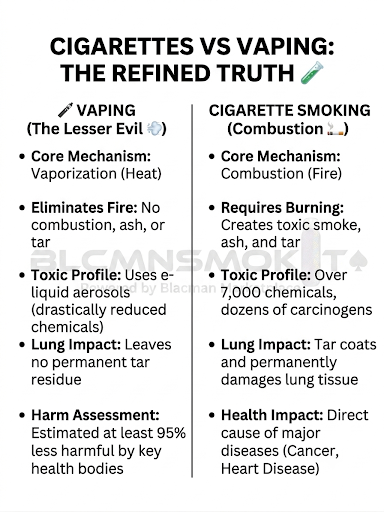
Cigarettes vs. Vaping: The Refined Truth
In a world full of noise, mixed messages, and sensationalized headlines, making an informed choice about what you put into your body can feel like navigating a maze. But when you strip away the biases and look purely at the science of consumption, the truth becomes crystal clear.
Understanding the real difference between traditional smoking and vaping isn't just about preference—it’s about understanding the core mechanisms of harm reduction.
Here is the refined breakdown of what happens when you switch from combustion to vaporization.
1. Core Mechanism: Fire vs. Heat
The fundamental difference between a cigarette and a vape device comes down to a simple scientific principle: how the active compounds are delivered.
Cigarette Smoking (Combustion): Traditional smoking relies entirely on fire. You are physically igniting dried tobacco leaf, triggering a chemical reaction known as combustion. This process requires burning at extreme temperatures, which inevitably changes the molecular structure of what you inhale.
Vaping (Vaporization): Vaping completely eliminates the element of fire. Instead of burning matter, a premium device uses precise, regulated electrical heat to turn an e-liquid aerosol into a smooth vapor.
2. The Toxic Profile: 7,000 Chemicals vs. Regulated Aerosols
Because combustion destroys organic material, it creates a massive toxic cocktail that your body has to process.
The Cigarette Reality: When a cigarette burns, the resulting smoke releases over 7,000 distinct chemicals. Within that chemical cloud, medical researchers have identified dozens of known carcinogens—substances directly linked to long-term DNA and cellular damage.
The Vaping Reality: Because e-liquids are vaporized rather than burned, the chemical footprint is drastically reduced. You are bypassing the thousands of combustion-born chemical byproducts completely, resulting in a significantly cleaner inhalation profile.
3. Lung Impact: The Threat of Permanent Tar
What you inhale leaves a footprint. The physical residue left behind in your lungs is where the long-term physical toll of smoking truly manifests.
Combustion Smoke: Burning tobacco generates thick ash and sticky, black tar. Over time, this tar coats the delicate internal lining of your lungs, paralyzing the tiny hair-like structures (cilia) responsible for cleaning out debris. This leads to permanent tissue damage and reduced lung capacity.
Vaporization Aerosols: Because a vape vaporizes liquid rather than burning solid material, it leaves no permanent tar residue behind. Your lungs are not forced to contend with sticky, solid byproducts that suffocate tissue.
The Global Harm Assessment: The 95% Benchmarks
When you evaluate the macro data, major international public health bodies—including Public Health England (PHE) and the Royal College of Physicians—have conducted rigorous independent reviews on harm reduction. Their consensus remains clear: Vaping is estimated to be at least 95% less harmful than smoking traditional cigarettes.
The Verdict
Smoking causes major, life-altering health conditions, from advanced respiratory diseases to severe cardiovascular strain, primarily due to the toxic byproducts of continuous combustion.
Vaping is not a magic health tonic, but when viewed through the lens of sophisticated adult harm reduction, it represents the lesser evil. By trading fire for technology, eliminating tar, and shedding thousands of unnecessary toxic chemicals, switching to a premium, open-system vape device is quite literally a breath of fresh air for your health span.
Choose sophistication. Choose clarity. Understand the refined truth.